
Introduction: The Price of Reaching the Top
I remember sitting on the couch with my teenagers, watching a documentary about Mount Everest, and my son, mid-mouthful of popcorn, casually asked, “Dad, how much does it cost to climb Mount Everest?” Thinking it would be like a gym membership or a high-end hiking trip, I Googled it. Big mistake. My bank account flinched at the numbers—$40,000, $50,000, even $100,000!
But why is it so ridiculously expensive? It’s just walking uphill, right? Turns out, there’s a whole industry built around getting climbers to the top of the highest mountain in the world—permits, gear, Sherpas, oxygen tanks, and even the grim reality of Mount Everest Rainbow Valley. If you’ve ever wondered why people still attempt it, despite the cost, risk, and the possibility of ending up a permanent landmark, let’s break it all down.
The Basics: What Makes Everest So Iconic?
Growing up in Southend-on-Sea, the tallest thing I ever climbed was a questionable ladder to clean my gran’s gutters. So when I hear people casually talk about summiting Mount Everest, I have to remind myself that this isn’t just another weekend hike—it’s climbing the highest mountain on Earth, and that’s no small feat.
But what exactly makes Everest so legendary? Let’s break it down.
How Tall is Everest? More Than Just a Big Hill
If you’ve ever complained about climbing a few flights of stairs, Everest will make you rethink your definition of “uphill.” Officially, Mount Everest stands at 8,848.86 meters (29,031.7 feet) above sea level, making it the highest peak on the planet. That’s about the height of 11 Burj Khalifas stacked on top of each other, or if you prefer a more relatable comparison, it’s like climbing a staircase with over 58,000 steps… in -40°C temperatures, with 30% of normal oxygen levels.
It wasn’t always this exact height, though. In 2020, China and Nepal finally agreed on a measurement after years of debate, confirming that Everest had grown slightly due to tectonic activity. So yes, the mountain is still getting taller, making future climbs even more of a lung-busting experience.
Where is Everest Located? The Border Between Survival and Insanity
Everest sits right on the Nepal-Tibet border, with climbers able to attempt it from two main routes:
- The South Col Route (Nepal): The most popular and commercialized route, known for its Everest Base Camp, where climbers spend weeks acclimatizing before the real climb begins.
- The North Col Route (Tibet): Less crowded but more exposed to extreme weather conditions and notorious for its bureaucracy (the Chinese government isn’t exactly handing out permits like candy).
While both routes lead to the same icy peak, each comes with its own challenges, whether it’s avalanches, altitude sickness, or simply the realization that you’ve spent a fortune to freeze in a tent.
Why is Everest So Dangerous?
It’s easy to romanticize climbing Everest. But before you start picturing yourself standing on the summit, arms raised in victory, let’s talk about the “Death Zone”—the point above 8,000 meters (26,247 feet) where oxygen levels are so low, your body slowly starts shutting down.
Here’s what makes Everest one of the deadliest mountains in the world:
- Lack of Oxygen: At the summit, you’re breathing in just one-third of the oxygen available at sea level. That’s like trying to run a marathon while breathing through a straw.
- Brutal Temperatures: With wind chills that can plummet to -60°C (-76°F), frostbite is a serious risk. Lose a glove, and you might lose fingers too.
- Treacherous Terrain: Crevasses, icefalls, and unpredictable avalanches make even the best-prepared climbers question their life choices.
- Long Summit Attempts: It takes an average of two months to complete the climb, with the summit push alone taking 8-12 hours in freezing, oxygen-starved conditions.
Perhaps the most chilling reality? Many climbers who don’t make it down remain on the mountain forever, turning Everest into a high-altitude graveyard. The infamous Mount Everest Rainbow Valley—named for the brightly colored jackets of fallen climbers—is a grim reminder of the risks involved.
How Many People Have Climbed Mount Everest?
For such a dangerous mountain, you’d think the number of successful summits would be low. But as of recent reports, over 6,000 climbers have reached the top, thanks to better gear, commercial expeditions, and the willingness to spend a small fortune for bragging rights.
That said, around 300 people have died attempting the climb, and with the increase in traffic jams at the summit, some experts argue that Everest has become too accessible—more of a tourist attraction than a true mountaineering challenge.
Everest is No Joke
While it’s easy to get caught up in the romance of climbing the world’s tallest mountain, Everest isn’t just another adventure—it’s a battle for survival. Between the extreme altitude, unpredictable weather, and sheer physical toll, even the fittest climbers struggle to make it to the top and back in one piece.
So, before you start booking flights to Kathmandu, ask yourself: Do I really want to risk my life (and life savings) for a selfie at 29,000 feet? If the answer is yes, well… let’s just say you’d better start training now.
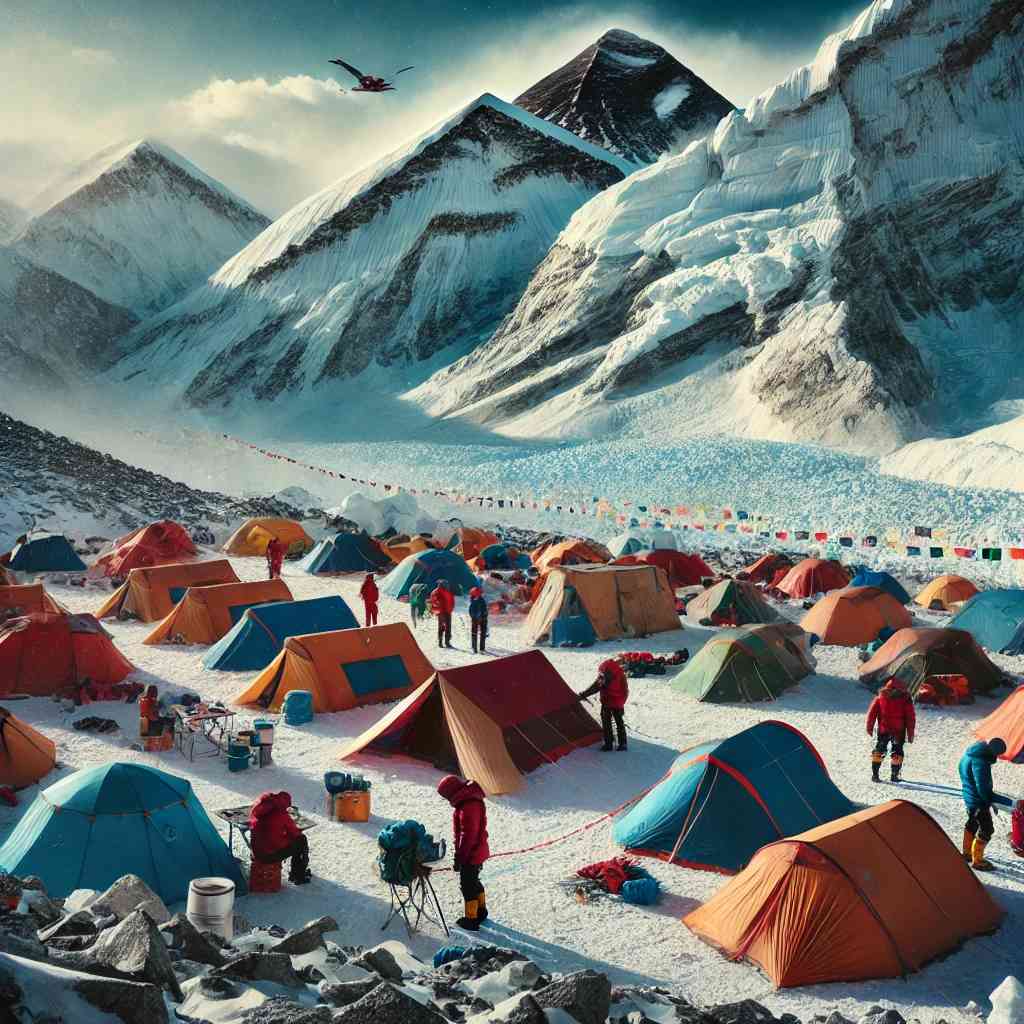
Breaking Down the Costs of Climbing Everest
When my son first asked me, “How much does it cost to climb Mount Everest?” I assumed it would be expensive, but I figured—flights, gear, a few guides—maybe $10,000 tops. Then I did some actual research. The numbers nearly made me choke on my tea. The cost of climbing Everest isn’t just high—it’s astronomical.
We’re talking anywhere between $30,000 and $100,000+ per person, depending on how much luxury (or suffering) you’re willing to pay for. But where exactly does all that money go? Let’s break it down.
1. The Price of Permission: Climbing Permits & Government Fees ($11,000-$15,000)
Before you even touch the mountain, you need a permit—basically a very expensive piece of paper from the Nepalese or Chinese government saying, “Yes, you may now risk your life.”
- Nepal charges around $11,000 per climber for a permit. On top of that, they require an additional $2,500-$4,000 deposit to ensure you don’t leave your trash (or yourself) behind.
- If you’re climbing from the Tibetan side, the permit is slightly cheaper at $8,000-$9,500, but you’ll have to deal with stricter regulations and the unpredictability of the Chinese government.
Oh, and if you’re thinking of sneaking up the mountain without a permit? Bad idea. In 2017, a South African climber tried this and was caught, fined $22,000, and banned from Nepal for ten years. So unless you fancy an expensive game of hide-and-seek with border officials, you’ll have to pay up.
2. Guided Expeditions vs. Going It Alone ($30,000-$100,000+)
There are two main ways to climb Everest:
- Join a guided expedition: This is the most common and safest option. You pay a climbing company to handle logistics, permits, Sherpa support, oxygen, and meals. A budget climb starts at $30,000-$40,000, while premium expeditions with experienced Western guides can run $80,000-$100,000+.
- Go independent: If you’ve got serious mountaineering experience, you could theoretically climb without a guide. But by the time you factor in permits, gear, oxygen, food, and the costs of hiring a private Sherpa, you’re still looking at $25,000 minimum—and you’re far more likely to die.
3. Sherpas: The Real Heroes of Everest ($5,000-$7,000 per climber)
If you think you’re the one climbing Everest, think again. The real heavy lifting is done by Sherpas—highly skilled local climbers who carry supplies, set ropes, and help you survive the Death Zone.
A personal Sherpa will cost between $5,000 and $7,000, depending on experience and responsibilities. Many risk their lives for Western climbers, often for little pay. And while it’s tradition to tip your Sherpa around $2,000-$5,000, some climbers try to cheap out—which is insane considering they just saved your life multiple times.
4. The Cost of Breathing: Oxygen Tanks & Supplies ($3,000-$4,000 per climber)
The higher you go, the less oxygen there is. To survive above Everest’s 8,000-meter “Death Zone,” most climbers rely on bottled oxygen, which isn’t cheap.
- A single oxygen tank costs around $500, and most climbers need five to seven tanks, totaling about $3,000-$4,000.
- Add in a mask and regulator (~$800-$1,000), and suddenly breathing feels very expensive.
Some climbers attempt Everest without supplemental oxygen—a feat that’s been done but is extremely dangerous. Even experienced mountaineers struggle with hypoxia, hallucinations, and loss of motor function. Not exactly ideal when you’re walking along a knife-edge ridge at 29,000 feet.
5. Food, Accommodation & Base Camp Costs ($2,000-$5,000)
Everest isn’t exactly known for its five-star dining, but you still have to eat.
- Meals at Everest Base Camp are flown in by helicopter or carried by yaks, meaning even basic food is pricey. A single meal can cost $20-$50, and over two months, this adds up to $2,000-$3,000.
- Accommodation at Base Camp isn’t cheap either. Staying in a tent at -20°C? That’ll be another $500-$1,000.
For those climbing from Tibet, the costs are slightly lower, but you’ll still need to budget thousands for supplies, transport, and bribes—I mean, “additional fees.”
6. Insurance & Evacuations: Just in Case You Need a $50,000 Helicopter Ride
Climbing Everest is dangerous, and if things go south, getting rescued isn’t cheap.
- Travel insurance for Everest (which covers medical emergencies and evacuation) ranges from $600-$1,500.
- A helicopter evacuation from Base Camp starts at $5,000-$10,000. If you need to be rescued from higher up the mountain, expect to pay $20,000-$50,000—if they can even reach you.
Many climbers get caught off guard by the fine print in their policies, so unless you fancy selling your house to cover an emergency airlift, make sure your insurance specifically covers high-altitude rescues.
7. Gear & Equipment: What You Need to Survive Everest ($8,000-$12,000+)
You can’t just show up in a pair of hiking boots and hope for the best. Everest requires specialized, high-altitude gear, and it’s expensive:
- Down Suit: $1,000-$2,000 (essential for not freezing to death)
- Mountaineering Boots: $500-$1,000
- Crampons, Ice Axe & Climbing Gear: $1,500-$3,000
- Tents, Sleeping Bags & Other Essentials: $2,000-$4,000
And this is just the bare minimum. High-end gear costs even more, and if you don’t already own it, you’ll be dropping five figures before you even step foot in Nepal.
Final Cost: Is Climbing Everest Worth the Money?
When you add everything up, the minimum cost of climbing Everest is around $30,000, and that’s for a no-frills experience with a high chance of failure. If you want a guided expedition with proper support, expect to pay $50,000-$100,000+.
So, is it worth it?
For some, absolutely. Standing on top of the world is a once-in-a-lifetime achievement. But for others, spending six figures to risk your life in sub-zero temperatures might seem, well… questionable.
If you’re still tempted, start saving now. And maybe take the stairs more often—you’re going to need the training.
Why Do So Many People Still Attempt It?
I get it. There’s something undeniably cool about standing on Mount Everest, looking down at the world, and thinking, Yep, I conquered this monster. But when you factor in the astronomical costs, life-threatening conditions, and the very real possibility of turning into a human popsicle, you have to wonder—why do people still do it?
Turns out, the reasons go beyond just bragging rights. Let’s dive into what drives thousands of climbers to risk it all for a few minutes at the top.
The Bucket List Appeal: Everest as the Ultimate Challenge
For many, Everest isn’t just a mountain—it’s the mountain. If you’ve got an adventurous streak, there’s no bigger prize than reaching the highest point on Earth.
It’s the same reason people run ultra-marathons, dive with sharks, or willingly sit through a 10-hour flight in economy—it’s about pushing personal limits. Some climbers train for years, tackling smaller peaks like Kilimanjaro or Denali first. Others just wake up one day and decide to throw six figures at a high-altitude near-death experience. Either way, it’s the ultimate test of endurance, strength, and sheer stubbornness.
There’s no denying that climbing Everest gives you serious street cred. Imagine casually dropping into conversation, “Oh yeah, back when I summited Everest…” It’s an instant attention grabber.
In a world obsessed with social media, where people post photos of their avocado toast like it’s an achievement, standing on Everest’s summit at 8,848.86 meters (29,031.7 feet) is next-level flexing. Some climbers even hire personal photographers to document their journey, ensuring they get that perfect I-survived-the-Death-Zone shot.
For wealthy thrill-seekers, Everest has become a bit of a status symbol, much like owning a yacht or casually buying a private island. The difference? If things go wrong on Everest, your ‘investment’ stays there—permanently.
Personal Growth & Mental Resilience: The Inner Everest
Beyond the physical challenge, Everest is also a mental battle. Many climbers talk about how the experience transforms them—not just in terms of fitness, but in mindset.
- Overcoming fear: The higher you climb, the more Everest tests your willpower. When you’re exhausted, freezing, and questioning all your life choices, pushing forward requires mental toughness most people will never experience.
- The power of patience: Climbing Everest isn’t a sprint—it’s a slow, grueling process that can take two months. If you’re used to instant gratification, Everest forces you to embrace the long game.
- A different perspective on life: Many climbers say that after Everest, everyday problems seem insignificant. If you’ve battled 60mph winds, near-zero oxygen, and the very real possibility of death, dealing with a long queue at the supermarket doesn’t seem so bad.
In a way, Everest becomes a metaphor for overcoming personal challenges—whether that’s a tough breakup, a career setback, or just surviving another Monday.
Is the Dream Worth the Risk?
For some, the allure of Everest outweighs the danger. But let’s not forget: this isn’t just another vacation. Everest is deadly, and while the idea of standing on top of the world is romantic, the reality is anything but glamorous.
If you’re still tempted, ask yourself: Do I want to climb Everest because I truly love mountaineering? Or do I just want the Instagram photo? If it’s the latter, maybe stick to a nice, scenic hike—and save yourself $100,000 and a potential obituary.

The Dark Side: The Price Isn’t Just Financial
It’s easy to get caught up in the romance of Everest—the adventure, the challenge, the epic views from the summit. But let’s be honest: climbing Mount Everest isn’t just expensive—it’s incredibly dangerous. And I’m not talking about twisted ankles or a bad case of altitude sickness. I’m talking about real, life-ending risks.
If you’ve ever wondered how many people have died climbing Mount Everest, the number hovers around 300+ recorded deaths, and that’s just the official count. Some bodies have never been found, while others remain frozen on the mountain, serving as eerie reminders of Everest’s deadly nature.
So before you start fantasizing about planting your flag at 29,000 feet, let’s take a look at the true cost of an Everest expedition—the one no one likes to talk about.
The Death Toll on Everest: The Harsh Reality
There’s no sugarcoating it: Everest kills people every single year. And the higher you climb, the more brutal the conditions become.
- Avalanches: One of the most common causes of death. The Khumbu Icefall is particularly infamous for its constantly shifting ice, capable of swallowing climbers whole.
- Exposure and Frostbite: Temperatures can drop to -60°C (-76°F). Lose a glove at the wrong time, and you might lose your fingers too.
- Altitude Sickness: Above 8,000 meters—known as the Death Zone—oxygen levels are so low that your body slowly starts shutting down. Without supplemental oxygen, most climbers would pass out and never wake up.
- Exhaustion: The final summit push can take 8-12 hours, often in the middle of the night. Some climbers become too weak to continue and simply collapse, never making it back down.
And here’s the chilling part: when someone dies on Everest, their body usually stays there. It’s simply too dangerous for others to attempt a rescue. This has turned the mountain into a high-altitude graveyard, with frozen bodies marking the trails like morbid mileposts.
One of the most famous is Green Boots, believed to be an Indian climber who perished in 1996. His brightly colored boots became a landmark on the Northeast Ridge route, serving as a stark warning to those who pass by.
Mount Everest’s “Rainbow Valley”: A Name That’s Anything But Cheerful
If you’ve ever heard of Mount Everest’s Rainbow Valley, you might assume it’s some scenic, Instagram-worthy spot near the summit. It’s not.
Rainbow Valley refers to the upper section of Everest’s Death Zone, where the bodies of fallen climbers lie—many of them still wearing their brightly colored mountaineering gear. From a distance, it looks like a tragic patchwork of reds, blues, and yellows scattered across the ice.
While some bodies are partially buried in snow, others remain perfectly preserved due to the extreme cold. They serve as an uncomfortable reminder that Everest doesn’t care how much you paid for your expedition—if you make a mistake, the mountain will take you permanently.
The Ethical Dilemma: The Cost of Climbing for Others
Everest isn’t just dangerous for the wealthy climbers paying their way to the top—it’s far riskier for the Sherpas who help them get there.
Sherpas, the indigenous mountain guides of Nepal, are the true heroes of Everest. They carry supplies, fix ropes, and often risk their own lives to save struggling climbers. But they do so at a massive cost.
- Sherpas face a death rate 12 times higher than soldiers in combat.
- Many are forced into dangerous climbs due to economic hardship, earning between $3,000 and $7,000 per expedition—money that often supports their entire families.
- Some have died while trying to rescue reckless climbers who underestimated the dangers of Everest.
This has sparked major ethical debates about whether commercial climbing has turned Everest into an exploitative industry, where Western climbers chase their bucket-list goals while local Sherpas take the biggest risks.
The Environmental Impact: Everest’s Growing Trash Problem
If you think of Everest as some pristine, untouched wilderness, think again. Thanks to decades of climbers leaving their mark, Everest is now one of the most polluted high-altitude sites in the world.
- Trash everywhere: Empty oxygen bottles, food wrappers, and discarded gear litter the mountain.
- Human waste crisis: With thousands of climbers spending weeks on the slopes, Everest Base Camp and beyond are now home to a serious waste management problem—as in, there’s literally frozen human waste all over the place.
- Melting glaciers revealing even more waste: As global temperatures rise, old trash (and human remains) once buried in ice are resurfacing, turning Everest into a melting time capsule of past expeditions.
Efforts have been made to clean up Everest, with Nepal introducing new waste deposit schemes and mandatory trash collection rules. But when climbers are barely clinging to life in the Death Zone, carrying an empty food wrapper isn’t exactly a priority.
Is Climbing Everest Now Overrated?
At some point in every conversation about Mount Everest, someone will say, “It’s the ultimate test of human endurance.” And sure, it is—for some people. But if we’re being completely honest, has Everest lost its magic?
Once upon a time, Everest was a wild, untamed challenge reserved for only the most skilled and daring climbers. Today? It’s a heavily commercialized, traffic-jammed, high-altitude theme park where, if you can pay, you can play.
Now, before the mountaineering purists come for me, let’s take a moment to explore the less glamorous side of the world’s most famous peak.
Is It Still a Real Challenge? The Everest “Tourist Route” Problem
Ask anyone who has climbed Everest, and they’ll tell you—it’s hard. The altitude alone makes it brutal, and even with bottled oxygen, experienced Sherpas, and the best gear money can buy, the mountain doesn’t take kindly to human ambition.
But here’s where things get controversial: has Everest become too easy?
- In the early days of mountaineering, reaching the summit required extensive skill, preparation, and self-sufficiency. Today, guided expeditions mean that even climbers with minimal technical ability can attempt the climb.
- Modern gear, fixed ropes, and high-altitude porters make the ascent more accessible than ever before. While Everest is still dangerous, it’s nowhere near as difficult as it was for Sir Edmund Hillary and Tenzing Norgay in 1953, when they became the first people to climb Mount Everest successfully.
- Climbers can now buy their way to the summit, with some companies offering VIP-style Everest experiences that include personal Sherpas, heated tents, and even gourmet meals at Base Camp.
This leads to an awkward reality: Everest is no longer just for elite mountaineers—it’s for anyone with enough money and a strong enough Instagram game.
Are There Better, Cheaper Alternatives?
If you’re determined to test your limits in high-altitude mountaineering, Everest isn’t the only option. There are plenty of equally (if not more) challenging mountains that won’t cost you a small fortune or turn into a high-altitude tourist trap.
1. Aconcagua, Argentina (6,961m) – A Budget-Friendly Beast
- The tallest mountain outside of Asia.
- Tough climb, but no technical mountaineering skills required.
- Costs around $5,000 instead of Everest’s $50,000+.
2. Denali, USA (6,190m) – Harder Than Everest
- The highest peak in North America and far more demanding than Everest.
- No oxygen required, but extreme cold and self-sufficiency make it a brutal test.
- Climbing costs are between $8,000 and $12,000.
3. Mount Elbrus, Russia (5,642m) – A Gateway to the Seven Summits
- The highest mountain in Europe, known as “Everest training.”
- Significantly cheaper at $1,500-$3,000, making it a great starter climb.
These mountains may not have Everest’s legendary name, but they offer serious adventure without the Everest-sized crowds or costs.

How to Train & Prepare for Everest (If You Still Want to Go)
Alright, so you’ve made up your mind. You’re determined to climb Mount Everest, despite the cost, danger, and the possibility of featuring in someone’s summit photo as a frozen landmark. Fair enough. But before you start booking flights to Kathmandu, you need to ask yourself one crucial question:
Are you actually ready for this?
Climbing Everest isn’t just about endurance or physical strength—it’s a test of your mental grit, survival skills, and ability to function on dangerously low oxygen. It’s not the kind of thing you can prepare for by doing a few squats at the gym or taking the stairs instead of the elevator. It takes years of training, multiple high-altitude climbs, and a ridiculous amount of self-discipline.
If you’re still serious about it, here’s how to train like someone who actually has a shot at making it back down in one piece.
1. Physical Training: More Than Just Cardio
Most people assume that climbing Everest is all about leg strength. Sure, that helps—but endurance is king. When you’re spending 10+ hours a day climbing at high altitude, carrying a heavy pack, and fighting off exhaustion, your fitness level can mean the difference between reaching the summit and collapsing before Camp 2.
The Key Components of Everest Training:
- Cardiovascular Endurance: Long-distance running, cycling, and hiking with a weighted pack. You need to be comfortable moving for hours without stopping.
- Strength Training: Focus on legs, core, and back—squats, lunges, deadlifts, and step-ups will help mimic the endless uphill climb.
- High-Altitude Acclimatization: If you live near the mountains, great. If not, simulated altitude training (using hypoxic masks or altitude chambers) can help your body adjust to low-oxygen environments.
- Flexibility & Stability: Yoga and balance exercises reduce the risk of injury—because the last thing you want is to sprain an ankle halfway up the Khumbu Icefall.
Most serious climbers train for a minimum of 12-18 months before attempting Everest. Some spend years preparing, tackling smaller peaks like Aconcagua or Denali first.
2. Mental Preparation: The Battle Inside Your Head
If you think Everest is physically hard, wait until you spend weeks stuck in a tent at Everest Base Camp, waiting for a weather window, unable to sleep, questioning all your life choices.
Climbing Everest is as much a mental challenge as it is a physical one. You’ll be cold, exhausted, and constantly battling self-doubt. If you’re not mentally prepared, you won’t make it past Base Camp.
How to Train Your Mind for Everest:
- Visualization Techniques: Many top climbers use visualization to mentally rehearse the climb before they ever set foot on the mountain. Picture yourself facing brutal winds, pushing through exhaustion, and standing on the summit.
- Meditation & Focus Training: Learning to stay calm under stress is crucial. Practicing controlled breathing, meditation, or even cold exposure therapy (yes, ice baths count) can help build mental resilience.
- Extreme Patience: You’ll spend weeks acclimatizing, often waiting in a tent for days. If you can’t handle boredom, frustration, and the sheer slowness of high-altitude climbing, Everest will break you.
3. Acclimatization: Preparing for the Thin Air
Here’s a harsh reality: your body is not designed to function at 8,848 meters (29,031 feet). No matter how fit you are, once you hit the Death Zone (above 8,000 meters), your body starts shutting down.
That’s why acclimatization is the single most important part of Everest prep. You need to gradually expose your body to high-altitude conditions so it can adapt to the lower oxygen levels.
How to Acclimatize Properly:
- Train at Altitude: If you can, spend time hiking or climbing in the Rocky Mountains, Alps, or Andes to get used to the thin air.
- Pre-Climb Expeditions: Many Everest climbers first attempt 6,000-7,000m peaks (like Lobuche East, Mera Peak, or Aconcagua) to build tolerance for extreme altitude.
- Use a Staged Climbing Approach: On Everest itself, climbers follow a rotational acclimatization schedule—ascending to higher camps, then descending to sleep at lower altitudes before pushing further up.
4. Nutrition & Hydration: Fueling for Survival
You can burn up to 10,000 calories a day climbing Everest. That’s not an exaggeration—your body is working overtime just to keep warm, let alone move. If you don’t fuel properly, you’ll start losing muscle, energy, and eventually the ability to function at all.
What Everest Climbers Eat:
- High-Calorie, High-Carb Diet: Think oatmeal, pasta, rice, and loads of energy bars. Protein is important, but carbs are king at high altitude.
- Hydration is Critical: Dehydration is a huge issue at altitude. Climbers drink 4-5 liters of water a day, often melting snow for drinking water.
- Electrolytes & Supplements: Keeping sodium, potassium, and magnesium levels up is crucial for preventing altitude sickness and muscle cramps.
Many climbers lose 10-15 lbs during the expedition. Some intentionally gain weight before the climb because they know they’ll be burning through body fat just to stay alive.
5. Gear & Equipment: Don’t Skimp on Survival
Everest is not the place to test out budget gear. The right equipment can literally mean the difference between life and death.
Essential Gear for Everest:
- High-Altitude Down Suit: Costs $1,000-$2,000 but keeps you from freezing to death.
- Oxygen System: Without bottled oxygen, only the most elite climbers stand a chance. Each bottle costs $500-$600, and most climbers need five to seven bottles.
- Climbing Boots, Crampons & Ice Axe: Your feet are your only transport—treat them well.
- Gloves & Mittens: Lose a glove in the Death Zone, and you might lose a few fingers too.
If you’re serious about Everest, you’ll need to invest thousands in top-quality gear. This is not the place to cut corners.
Research and Reference Sources
For those who want to dig deeper into the realities of climbing Mount Everest, here are some authoritative sources, studies, articles, and videos that provided valuable insights for this article. These references cover everything from Everest’s cost breakdown and training requirements to historical data, ethical concerns, and survival strategies.
Everest’s Cost, Logistics & Commercial Climbing Industry
- Exped Review – The Cost of Climbing Mount Everest – A detailed breakdown of why Everest is so expensive.
- Outside Magazine – How Everest Was Turned Into an Industry – How Everest has turned into a multi-million dollar industry.
- The Himalayan Database – Comprehensive climbing records and expedition statistics for Everest.
Everest’s Dangers & The Death Zone
- In Mountaineering, What is the Death Zone – An in-depth Wikipedia page on how extreme altitude affects the human body.
- National Institute of Health – Why So Many People Die on Everest – Analysis of Everest’s increasing fatalities due to overcrowding and mismanagement.
Training & Preparation for High-Altitude Climbing
- Alpine Ascents – How to Train for Everest – A guide on building endurance and strength for extreme climbs.
- Mountaineering Training from the UIAA – Official guidance from the International Climbing and Mountaineering Federation.
- National Institute of Health Study – Psychological Implications of Altitude Training – A scientific study on how training impacts high-altitude performance.
Everest’s Ethical Issues
- The Washington Post – The Cost of Climbing Everest Goes Beyond Money – A book review of ‘Everest Inc’ discussing the ethical dilemma of climbing Mount Everest.
- New York Times Archives – Sherpa Exploitation in the Everest Industry – How the commercial climbing boom has increased the risks for Sherpas.
Video References: First-Hand Everest Experiences & Expert Insights
- Everest 2019 Traffic Jam Footage (The Straits Times) – Footage showing the crowded summit route that led to multiple deaths in 2019.
- All the Ways Everest Can Kill You (WIRED) – A documentary covering Everest’s most dangerous moments and the increasing fatalities.
- Bear Grylls Reveals What Climbing Mount Everest Is Really Like – A detailed and personal explanation of how difficult climbing Mount Everest really is.