
You ever walk into your bathroom, take one look at the shower, and wonder if you’re about to step into a science experiment? That was me this morning. I spotted black mold creeping along the grout, right above the shower floor, and I did what any responsible dad would do—I asked my teenage son if he’d noticed it.
He shrugged.
Didn’t even look up from his phone.
Now, I didn’t expect him to bust out the cleaning supplies and go full Mr. Clean, but I figured at least an “Oh yeah, I saw that” would’ve been nice. Nope. Just a shrug. Which means it’s up to me (as usual) to figure out how to clean black mold in the shower before it turns into something out of a horror movie.
Why Is There Mold in My Shower?
Black mold thrives in damp, humid places—aka, my bathroom. Between steamy showers, poor ventilation (because, let’s be real, my kids never remember to turn on the exhaust fan), and leftover soap scum, my shower is basically a mold paradise. If I don’t stay on top of it, those black spots above the shower and along the caulking just keep coming back.
Is Black Mold Dangerous?
I don’t want to sound dramatic, but mold isn’t just gross—it can mess with your health. Breathing in mold spores can trigger allergies, cause respiratory issues, and generally make life miserable. Plus, it makes the shower look like it belongs in an abandoned gas station.
So, since my kids clearly aren’t worried about it, I did what any annoyed dad would do—went down the rabbit hole of how to get rid of mold in a shower once and for all. Turns out, it’s actually not that hard… as long as you’re the one who actually does it.
Let’s break it down.
Identifying Black Mold in the Shower
Alright, so before we can even talk about how to get rid of black mold in the shower, we need to be sure that’s actually what we’re dealing with. Spoiler alert: If you’ve got dark, slimy, or fuzzy-looking spots creeping up your grout, caulking, or even on the ceiling above the shower—congratulations, you’ve got yourself a mold problem.
What Does Black Mold Look Like in a Shower?
Mold isn’t always as obvious as big, ugly black patches. Sometimes it starts as tiny specks that you barely notice until they spread. I’ll be honest—before today, I’d ignored the little dots in the grout. I figured it was just dirt from my son’s questionable shower-cleaning habits. But when I saw the black spots above the shower creeping toward the ceiling, I knew this wasn’t just a little grime.
Here’s what to look for:
- Black, greenish, or dark brown spots—most common in grout lines, caulking, and tile corners.
- Slimy or powdery texture—it depends on the type of mold, but if it wipes away in a smear, that’s a bad sign.
- Persistent musty smell—if your shower always smells damp and funky, even after cleaning, mold is probably hiding somewhere.
Where Does Mold Hide in the Shower?
Mold doesn’t just pop up randomly. It has its favorite hangouts:
- Shower grout and caulking – This is the number one spot for black mold in the shower. It loves the moisture trapped in those tiny cracks.
- Shower floor and tiles – Ever seen black spots on your bathtub or on the shower floor that don’t scrub away easily? That’s mold embedding itself into the surface.
- Above the shower (on walls or ceiling) – Mold spores float up with steam and settle there, especially if your bathroom isn’t well-ventilated (which mine isn’t, because, again, my son never uses the fan).
Why Is There Mold in My Shower?
Short answer? Moisture. Long answer? A mix of bad ventilation, leftover soap scum, and general bathroom neglect (looking at my kids here). When water sits too long, especially in places that don’t dry properly, mold takes over.
Now that we know what we’re dealing with, it’s time to talk about how to get rid of mold in the shower—and more importantly, how to make sure it doesn’t come back.
Effective Methods to Remove Black Mold
Alright, now that we’ve identified the black mold creeping through my shower like an uninvited houseguest, it’s time to actually do something about it. And by we, I mean me, because asking my teenage son to clean mold is about as productive as asking my dog to do the dishes.
The good news? You don’t need expensive cleaners or a hazmat suit. With the right approach, you can get rid of mold in your shower and keep it from coming back (hopefully).
Safety First: Prepping for Mold Removal
Before we dive in, let’s cover the basics—because scrubbing black mold without taking precautions is basically inviting your lungs to a mold spore party.
- Wear protective gear –
Gloves, a mask, and eye protection are a must, especially if you’re using strong cleaners like bleach or hydrogen peroxide.
- Ventilate the bathroom –
Open a window, turn on the exhaust fan, or prop the door open. Mold spores don’t need an invitation to spread.
- Keep kids and pets out –
Because the last thing I need is my dog licking up vinegar off the shower floor.
The Best Ways to Kill Black Mold in a Shower
Now, onto the real work. I tested a few different methods to see what works best, and here’s what I found.
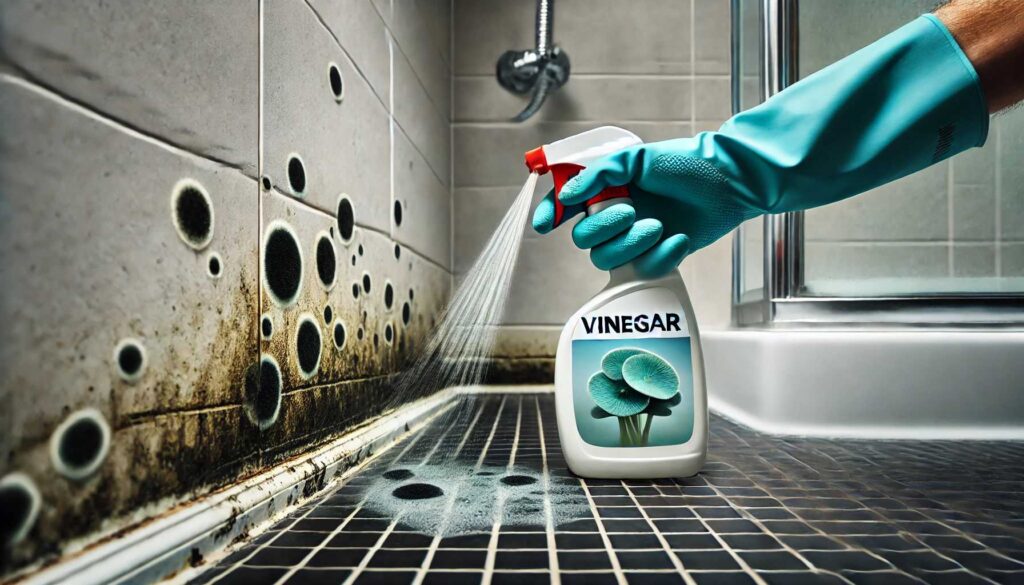
1. White Vinegar (The Natural Mold Killer)
If there’s one thing I always have in my kitchen (besides snacks my kids magically make disappear), it’s vinegar. Turns out, it’s also a powerhouse for killing mold (NCBI’s Research on Vinegar’s Antimicrobial Properties).
- How to Use It:
- Pour undiluted white vinegar into a spray bottle.
- Spray directly onto the black mold in grout, caulking, or on the shower floor.
- Let it sit for at least an hour (or longer if the mold is stubborn).
- Scrub with a brush and rinse with warm water.
- Does It Work?
Yes—especially for light to moderate mold buildup. Plus, vinegar is safe and doesn’t leave behind toxic fumes. Just be prepared for your bathroom to smell like a pickle factory for a bit.
2. Hydrogen Peroxide (For When Vinegar Isn’t Enough)
If vinegar doesn’t cut it, hydrogen peroxide is the next step up. This is because hydrogen peroxide is an antifungal and antibacterial agent that works wonders on black mold.
- How to Use It:
- Use 3% hydrogen peroxide in a spray bottle.
- Spray it directly onto the moldy areas.
- Let it sit for 10-15 minutes, then scrub with a brush.
- Rinse with water.
- Does It Work?
Absolutely. It’s stronger than vinegar but still non-toxic. I used this on some stubborn black spots in my grout, and it cleared them up without much effort.
3. Baking Soda Paste (A Gentle Scrubbing Agent)
Baking soda is another easy, non-toxic way to tackle black mold, especially if you need a little scrubbing power.
- How to Use It:
- Mix baking soda with water to form a thick paste.
- Apply the paste to moldy grout, caulking, or the shower floor.
- Let it sit for 10 minutes.
- Scrub with a stiff brush and rinse.
- Does It Work?
Yes, but it’s better for light mold or as a follow-up after vinegar or hydrogen peroxide. It also helps neutralize odors, which is a plus.
4. Bleach (The Heavy-Duty Option)
Bleach is the nuclear option for black mold in a shower. It kills mold on non-porous surfaces, but it doesn’t penetrate grout or caulking deeply.
- How to Use It:
- Mix 1 cup of bleach with 1 gallon of water.
- Apply to moldy areas using a sponge or spray bottle.
- Let it sit for 15 minutes, then scrub and rinse.
- Does It Work?
Yes, but it’s best for surface-level mold. It’s also harsh, so use it in a well-ventilated area and NEVER mix bleach with vinegar or ammonia unless you want to create toxic fumes.
Targeted Cleaning for Different Areas
Shower Grout & Caulking
Grout and caulking love to trap mold, making them some of the toughest spots to clean.
- Try vinegar or hydrogen peroxide first.
- If mold is deeply embedded, a baking soda paste with bleach can help.
- For moldy caulking that won’t come clean, you may need to remove and replace it.
Shower Floor & Tiles
If you have black spots on your bathtub or shower floor, they could be mold or mineral buildup.
- Scrub with baking soda paste or a vinegar solution.
- For stubborn stains, let hydrogen peroxide sit on them before scrubbing.
Black Spots Above the Shower (Ceiling & Walls)
Mold on the ceiling above the shower means you’ve got a ventilation problem.
- Spray with hydrogen peroxide or vinegar and let it sit.
- Wipe clean and dry thoroughly.
- Consider using a dehumidifier or running the exhaust fan more often.
What’s the Best Way to Get Rid of Black Mold in a Shower?
For my bathroom, the winning combo was:
- Spraying vinegar on all moldy areas and letting it sit.
- Scrubbing with baking soda paste for extra cleaning power.
- Using hydrogen peroxide on stubborn spots in the grout.
It took about an hour, and by the end, my shower looked brand new (not that my kids noticed).
Now that the mold is gone, I just need to figure out how to keep it from coming back—preferably without turning into the bathroom police. But that’s a problem for future me.
Preventing Black Mold Growth
Now that I’ve scrubbed my shower within an inch of its life, the last thing I want is for the black mold to come back. Because let’s be honest—there’s no way I’m doing this deep clean every month. So, I did some digging (because clearly, my teenage son isn’t going to take this on), and I found the best ways to keep mold from creeping back into my grout, caulking, and shower floor.
If you want to stop black mold in your shower for good, here’s what you need to do.
1. Keep Your Shower Dry (As Much As Humanly Possible)
Moisture is the #1 reason mold keeps coming back, and unless I turn my bathroom into a sauna-free zone (which won’t happen, because teenagers), I need to work with what I’ve got.
- Squeegee the Shower After Every Use
I know, I know—it sounds like overkill. But using a shower squeegee to wipe down the tiles and shower floor after each use gets rid of extra water before it has a chance to sit and cause problems. It takes all of 30 seconds and can seriously cut down on mold growth. - Wipe Down Problem Areas
I’m not saying you need to towel-dry your entire shower like a maniac, but if you have a spot that always seems to grow mold (like the corner where water pools or that tiny gap in the caulking), a quick wipe with a dry cloth can make a difference.
2. Improve Bathroom Ventilation
My bathroom has an exhaust fan. My kids, however, act like they don’t know it exists.
- Turn on the Exhaust Fan (and Keep It Running)
If you have a bathroom fan, run it during every shower and leave it on for at least 20 minutes afterward. This helps pull moisture out of the air before it settles on your shower walls, which is basically a “No Vacancy” sign for mold. - Crack a Window (If You Have One)
No fan? No problem. Opening a window lets steam escape naturally, which makes it harder for mold to grow above the shower and on your bathroom walls. - Use a Dehumidifier
If your bathroom stays humid all the time, a small dehumidifier can help keep things dry. I haven’t gone this route yet, but if I have to scrub mold off the ceiling again, I might.
3. Clean the Shower Regularly (Without Going Overboard)
No one wants to spend their weekends scrubbing grout, so instead of waiting for the mold to take over, a little maintenance goes a long way.
- Use a Mold-Preventing Spray
I started spraying down my shower once a week with a mix of white vinegar and water (50/50). It kills any sneaky mold spores before they turn into a full-blown problem. Bonus: It also keeps the shower smelling fresh. - Scrub the Grout and Caulking Monthly
I know—who has time for this? But giving your grout a quick scrub with baking soda or hydrogen peroxide once a month can keep mold from building up in those tiny cracks. - Replace Old Caulking If Needed
If your shower caulking is stained with mold and won’t come clean, it’s time to remove it and reapply a fresh layer. Mold-resistant caulk is a thing, and I highly recommend it.
4. Fix Leaks and Address Problem Areas
Mold doesn’t just thrive on shower walls—it can also creep into cracks caused by leaks.
- Check for Leaks Around the Shower
If your shower head drips or water pools in weird places, you might have a leak feeding the mold. Fixing it now can save you from a bigger headache later. - Seal Cracks in Tiles or Grout
Mold loves to hide in tiny cracks. If your grout is crumbling or your tiles are loose, reseal them before moisture seeps in and makes things worse.
Keeping Black Mold Out of My Shower for Good
After going through the hassle of scrubbing every inch of my shower, I’m determined to make sure I never have to do it again (or at least not for a long time). The biggest game-changers? Using the exhaust fan, squeegeeing after showers, and giving everything a quick vinegar spray once a week.
Will my teenagers suddenly start helping with this? Unlikely. But at least now I have a plan that doesn’t require a full weekend of scrubbing.
And if nothing else, I’ve got the satisfaction of knowing that, for now, my shower is mold-free—whether my kids care or not.
References & Resources
As always, I try to verify my random thoughts with research and information from trusted sources. Here are some of the articles I used for this content:
Effectiveness of Vinegar and Hydrogen Peroxide Against Mold:
- Research indicates that vinegar can prevent mold growth on fruit and remove certain household molds, though its efficacy varies by mold type. (Healthline: Does Vinegar Kill Mold?)
- Hydrogen peroxide is recognized for its antifungal properties and is effective in eliminating mold on various surfaces. (Healthline: Does Hydrogen Peroxide Kill Mold?)
Health Effects of Black Mold Exposure:
- Exposure to black mold can lead to symptoms such as sneezing, coughing, congestion, and eye irritation. (Cleveland Clinic: Black Mold Health Risks)
- The Centers for Disease Control and Prevention (CDC) note that mold exposure can cause nasal stuffiness, throat irritation, coughing, wheezing, eye irritation, and skin irritation. (CDC: Mold and Health Effects)
Preventive Measures Against Mold Growth:
- The Environmental Protection Agency (EPA) recommends controlling moisture through proper ventilation and prompt repair of leaks to prevent mold growth. (EPA: Mold Prevention Strategies)
- Regular cleaning and drying of damp areas are essential steps in mold prevention. (CDC: Preventing Mold Growth)